2024-03-10

Who Are We Now

We are Unitarian Universalists. We are a people of passion and intelligence – of moral imagination, creativity, and engagement.

We are a people NOT of creed; we are creedless. In this regard, we are not unique. We
this in common with, oddly enough, the Southern Baptist Convention, which is officially creedless, as is the Christian Church (Disciples of Christ). We go a little further in declaring not only that we have no creed, but that, for us, religion itself is not about what one believes.

What do Unitarian Universalists believe? We believe that religion isn’t about believing. So what is it about? One answer that might occur to you is: Religion is about how you live. It’s about the ethics and values that guide your life. And that’s true. I’d say religion is about three things, and the first one is how you live, the ethics and values that guide your life. Second, religion is about community – the people you come together with, and share rituals to affirm your community connection. And third, religion is about experience – the experience of awe and wonder, of mystery, transcendence, oneness – the experience of simultaneous intimacy and ultimacy.

Believing – holding certain declarative sentences to be true – may be a part of one’s approach to religion, but it is optional. What is essential are moral values, community, and direct experience of transcending mystery and wonder. Beliefs are an incidental, peripheral, and ultimately unnecessary aspect of religion, of spirituality.

We are a people not of creed. Now, I need to be clear, having no creed doesn’t mean you can believe anything you want to. It does mean we respect freedom of conscience – that you can believe what your conscience requires without fear of censure. This distinction between believing what you want to and believing what your conscience requires is important. What you want to believe might be what is easy – a theology that is superficially attractive, doesn’t require much thought or creative work. You might want some belief that you can hold and gaze upon like a pretty crystal: beautiful and static. But hearing and heeding what your heart, mind, and conscience dictate requires effort.

Forty years ago, I was 24 years old, a graduate student at Baylor University in Waco, Texas, and I was a member of the Unitarian Universalist Fellowship of Waco, Texas. Members of this congregation, Paul and Jane Derrick, were also then members of that Waco fellowship, as was one Neecie Vanston, who was elderly then, and has since passed on. Neecie came up to about the middle of my chest. She was a long-time and dedicated member of that fellowship. She had been part of the small group that founded the Waco UU Fellowship back in the 50s. I was newly returned to the fold after having been unchurched since high school, and I didn’t understand that distinction between the easy and lazy believe-anything-you-want-to and the disciplined quest to discern your own heart and mind’s dictates.

One Sunday in Waco, during our holiest sacrament -- the coffee communion after the service -- I made the mistake of blithely blurting, “We’re Unitarian Universalists. We can believe whatever we want to.” Neecie overheard that remark. And she turned around. I will never forget it. It was a religious moment. “You think I believe in what I do because I want to?” she said. “I believe this because I have to. You think here, in Waco, Texas my life wouldn’t be a lot easier if I could be a Baptist? But I can’t. My conscience won’t let me. If this were about what I wanted to believe,” Neecie continued, “about what I found it convenient and easy to believe, you wouldn’t see my face here on Sunday morning.”

That was the day I learned that Unitarian Universalism is not about believing anything you want to. It does mean each of us is free to believe what we find we have to – because our conscience won’t let us believe otherwise.

We are a people not of creed. We are also a people not of canon. We have no canonical bible. Of all the words and writings offering insights, telling the story of who we are as people, of how reality is – powerful words of wisdom and inspiration – we do not select a few of them to designate as our holy scripture while all else is apocrypha or supplement or commentary, or else entirely secular. For Jews, the canon is the 39 books of the Tanakh, and especially the 5 books of the Torah. For Catholics, those 39, plus 7 more, plus the 27 books called the New Testament, making 73, are canonical. The Orthodox Bible adds 6 more books, for a canon of 79 books. When the Protestants came along, they pared back to just 66 books: the 39 books of the Hebrew Bible, plus the 27 New Testament books.

We Unitarian Universalists are canonless as well as creedless. We look to all the world’s traditions for wisdom and insight, and are ever open to new work that we may find limns the ineffable, reaches for what cannot be grasped, or points us a way. Our canonlessness more radically separates us from other Western faith traditions than our vaunted creedlessness does. We are a people neither of creed nor of canon, but of covenant. We are bound, and bound together, not by common belief, nor by common scripture of study, but by a common promise. Covenant – in the religious sense – is not like a contract, where if one party doesn’t live up to their part the other side doesn’t have to live up to theirs. Covenant continues to bind us even when we break covenant.

To live the way of covenant is to be constantly breaking it, to be constantly failing, and to be constantly called back, or called forward, to the promise of our promise. The covenant continues to call and to compel, to beckon us toward the promise of a life constituted by promising, no matter how many times we may have broken or will break our vow. The eternal covenant, the timeless covenant is this promise to promise to each other – the covenant to be in covenant. More than that, and isn’t eternal.

As soon as we articulate – select language to express -- the content of our covenant, our promise to each other, then those words derive meaning from a particular time and place, an unfolding history, an evolving culture. Each generation must undertake anew the tasks of soul searching and of word smithing to shape in words the soul of the promise we discern in ourselves – for each generation, though formed and shaped by previous generations, must also understand its uniqueness and the unique time in which it finds itself.

In 1865, we Unitarians, although understanding ourselves as creedless, were struggling to articulate a covenant without harkening back to creed. The first National Unitarian Conference approved a statement saying that we "disciples of the Lord Jesus Christ" devoted to “the service of God and the building-up of the kingdom of his son." Even then many of us objected to articulating our promise to each other as a promise to uphold beliefs. But it took a generation for us to work out that what we really meant was – in the language of that generation -- “love to God and love to man.” We might translate that as something like love of this infinite creation and its infinite creativity, and love of each other. We had moved from defining content of belief to stipulating our core verb: love.

Whatever we might believe, our promise to each other is to love together: love each other and the reality in which we find ourselves. Then in 1887, William Channing Gannett laid out “Things Commonly Believed Among Us.” We notice, on the one hand, that he’s still trying to capture what we’re about in beliefs, but on the other hand, he takes it back by saying it’s not what we all believe, or what one has to believe to be a Unitarian – it’s just what is commonly believed among us. In that tension, Gannett, and the Western Unitarian Conference that adopted his statement that year, were essentially articulating the covenant of their time. That statement said it was common among us to hold that:
  • what is primary is loving the good and living the good, counting nothing good for self that is not good for all,
  • this is done only through working together,
  • reason and conscience are our authority,
  • we honor all inspiring scripture, and revere all teachers of truth, righteousness, and love,
  • we and our world are growing and evolving,
  • good and evil are their own recompense and heaven and hell are states of being,
  • the self-forgetting and loyal life awakens union with things eternal.”
In 1887, Gannett said this was commonly believed among us. No Unitarian had to believe it, or particularly resonate with that language, but every Unitarian did need to understand that they were throwing their lot in with a people who commonly believed this way. In that way, what Gannett gave to his generation was essentially an articulation of our covenant -- not a creed, since adherence to it was not a requirement, but a covenant, since being a Unitarian meant promising to support a community that was generally inclined to favor what Gannett had said.

After 1887 the flow of generations did produce their own articulations of our covenant. But none of the various articulations of covenant has ever been the whole truth of the people we are. Not the whole truth.

Here at First Unitarian of Des Moines we also express our covenant in our mission: to grow ethically and spiritually, serve justly, and love radically. That’s also an expression of covenant. But First Unitarian Church of Des Moines was a congregation held by covenant long before we adopted our current mission statement, or the one before that. And Unitarian Universalists have been a people of covenant from long before 1985 when we adopted our current set of principles, and before William Channing Gannett’s statement of 1887.

After all, the expression of the covenant is not the covenant. The word "moon" is not the moon. The expression of the covenant is some set of words. The covenant itself is the mysterious force that holds us together and is ultimately beyond words. The covenant of love, of fidelity to one another, the sacred promise to walk together – the whole truth -- is eternal. The ways that we give expression to that eternal must fit the particular culture and time.

In 1961, when Unitarians and Universalists came together to form the Unitarian Universalist Association, our initial documents included a set of principles. One generation later -- right on schedule -- we engaged a process to re-write them. So, four generations – about 100 years – after William Channing Gannett’s 1887 statement, Unitarian Universalists adopted our current denominational covenant. I’ll recite it.
We, the member congregations of the Unitarian Universalist Association, covenant to affirm and promote: The inherent worth and dignity of every person [or: every being] Justice, equity and compassion in human relations Acceptance of one another and encouragement to spiritual growth in our congregations A free and responsible search for truth and meaning The right of conscience and the use of the democratic process within our congregations and in society at large The goal of world community with peace, liberty, and justice for all Respect for the interdependent web of all existence of which we are a part.
By the time this was approved, I had moved from Waco and was living in the Atlanta area. I don’t recall hearing much about it at the UU Congregation of Atlanta, and I didn’t pay it any attention. I think most UUs at the time didn’t regard the specific wording of the UUA’s article II bylaws as very important. But over the course of the next 10 or 15 years, the principles started to catch on among us. More and more of us started referencing them, and learning to recite them – as I just did.

The seven principles started showing up in the literature and the pamphlets and hand-outs and wallet-size cards of more and more of our congregations. It took a while, but the seven principles got into our hearts. They got into mine. Did they get into yours? Can you recite them? If you’re new here, I’ll give you a pass – you’re off the hook -- but if you’ve been around for 10 years and can’t recite the seven principles, why not?

Another generation went by, and that brought us to the late aughts. For two years, our congregations were enjoined to discuss possible revisions to our Article II by-laws, which includes the principles, and submit ideas to the Commission on Appraisal. I remember leading classes and meetings about that at the congregations I was serving at the time, back in 2008 and 2009. The Commission received the input and produced a proposed revision, which came before the General Assembly in 2009 in Salt Lake City for initial approval. Initial approval would have sent the proposal to the congregations for a year of discussion, with final approval subject to vote of the 2010 General Assembly.

The proposed changes in the principles themselves were slight. There would still be seven of them. The third principle was shortened from
“acceptance of one another and encouragement to spiritual growth in our congregations”
to simply
“acceptance of one another and encouragement of spiritual growth.”
The fifth principle was similarly shortened from
“the right of conscience and the use of the democratic process within our congregations and in society at large”
to simply
“the right of conscience and the use of democratic processes.”
The seventh principle changed
“respect for the interdependent web of all existence of which we are a part”
to
“reverence for the interdependent web of all existence of which we are a part.”
The other four principles were not changed at all.

A more substantive change was proposed for the preamble to the seven principles. It would have changed from:
"We, the member congregations of the Unitarian Universalist Association, covenant to affirm and promote:"
to
"Grateful for the gift of life, we commit ourselves as member congregations of the Unitarian Universalist Association to embody together the transforming power of love as we covenant to honor and uphold:"
The proposed changes to the sources section was much greater – it would have replaced our six sources with three descriptive paragraphs.

Moreover, the proposal added a paragraph after the principles, and then added a section on inclusion to replace a section on anti-discrimination with a fuller expression of commitments to antiracism and multiculturalism.

I was there in Salt Lake City, 2009, when moderator Gini Courter called for the vote on the Article II bylaws change -- and the yellow voting cards were held aloft by those in favor, and then by those opposed to the proposed revision. It looked like the same number on each side. So she called again for the Pro to raise their voting cards, and this time the GA counters systematically went down the rows tallying the votes, and then the same was done for the Con. When the final tally was in, 573 delegates had voted to send the proposal to the congregations – and 586 voted not to.

I voted for the revisions, but the stronger feelings in the room tended to be on the Con said – and most of it was related to the change in the sources. A few years later, however, in 2013, we did adopt that new section on inclusion – what you see on your blue hand-out as the current section 2.3.

And in 2017, we tweaked the second source from “words and deeds of prophetic women and men” to “words and deeds of prophetic people.”

But now a more substantial change from the language adopted now almost forty years ago is before the denomination. The covenant is eternal. The words we choose to express the covenant must address the needs of the time – while also honoring our heritage.

Seven values replace the seven principles. They are represented as a flower, with love at the center and the six other values as the petals. If you haven’t been able to learn the seven principles, you’ll find it easier to learn the seven values: love, interdependence, pluralism, justice, transformation, generosity, equity.

The proposed version appears to be longer, because each of those seven values has two or three sentences about it – but the part you meaningfully learn to recite is actually shorter: love, interdependence, pluralism, justice, transformation, generosity, and equity.

Our current principles don’t have the word “love” anywhere. In the late 19th-century, we Unitarians resolved a dispute we’d been having by declaring that what our religion actually boiled down to was simply “love to god and love to man.” Today we wouldn’t say “man” and maybe wouldn’t say “god” – but we understand that the crux of the matter then was love. It is what we’ve always been about – and I think it feels good to put that back in the center.

And if you are devoted to the seven principles, and can recite them, then they are still available as a handy way to give a summary of what Unitarian Universalism is all about. They aren’t going away. For that matter, William Channing Gannett’s words from 137 years ago have never gone away, and are to this day not a bad way to summarize what we’re all about.

As each Unitarian Universalist generation finds its Unitarian Universalist voice, the past articulations don’t go away. They move into being the nourishing ground on which we can stand to proclaim our voice to a new day.

2024-03-03

Choose Abundance

The issue of miracles was a defining point in Unitarian history. Prior to the Civil War, in the 1840s, Unitarian minister Theodore Parker created a stir by saying Jesus did not perform the miracles that most Westerners at that time interpreted the gospels as saying Jesus did perform. Theodore Parker’s preaching career spoke to many topics, most of which were lost on his critics who only heard one thing: Rev. Parker denies the miracles. This is the tradition we inherit.

The tradition we inherit also includes an older wisdom, which Unitarians and Universalists have been rediscovering and reclaiming -- that “the true law of life,” as a different Parker – Parker Palmer -- said, is the miracle “that we generate more of whatever seems scarce by trusting its supply and passing it around.” Expand the circle, and it will be full.

Each of the four gospels of the Christian Testament includes a version of the "loaves and fishes" story: five loaves, two fish, and five thousand people were fed. What happened? The story may, of course, have been fabricated from whole cloth, but that hardly matters. What is it a story OF? Fictional or not, what does it illustrate? Our historical identity has grown out of denying miracles, but I don’t think we need to keep doing that. I want to say there was a miracle there. Maybe there wasn’t anything we would call supernatural. There wasn’t, in a phrase from theologian Daphne Hampson, “an interruption of the causal nexus of history and nature.” Yet it was a miracle. It may not have interrupted the causal nexus of history and nature. But it did interrupt the mind’s chatter about its needs and fears. It interrupted obliviousness and allowed people to notice wonder and beauty – the abundance that life presents in each moment. It’s a story that still has the power to interrupt the ego’s defense mechanisms and call us to neighborliness – call us to expand our circle.

“Spirituality,” if it means anything, means this: awareness of the reality of abundance. It means clarity that what you have, what you are, where you are, is enough. It’s one thing to know this in your head – to know it cognitively. It’s another thing to live that truth with every breath and every step. That’s hard to do. It does not come naturally to us who are acculturated to modern society, and it involves more than cognition. Spirituality is quite a handy word for this capacity for not-merely-cognitive perception of abundance.

The abundance is there. We have but to expand the circle of our consciousness to take it in. Abundance is the true law of life. Abundance abounds. All the world’s religions teach this.

In the Jewish tradition, the scriptures say it over and over. God is good, God provides, God is faithful. In Genesis, God lovingly brings the entire world into being, and provides human beings with everything they need. "Be fruitful and multiply," God says, and the fruitfulness overflows. The Book of Psalms sings again and again about all the gifts God gives us. Psalm 104, just to pick one example, says:
"You make springs gush forth in the valleys;
they flow between the hills, giving drink to every wild animal;
the wild asses quench their thirst.
By the streams the birds of the air have their habitation;
they sing among the branches.
From your lofty abode you water the mountains;
the earth is satisfied with the fruit of your work.
You cause the grass to grow for the cattle,
and plants for people to use,
to bring forth food from the earth,
and wine to gladden the human heart,
oil to make the face shine,
and bread to strengthen the human heart.
The trees of the Lord are watered abundantly,
the cedars of Lebanon that he planted.
In them the birds build their nests;
the stork has its home in the fir trees.
The high mountains are for the wild goats;
the rocks are a refuge for the coneys. . . .
O Lord, how manifold are your works!
| In wisdom you have made them all;
the earth is full of your creatures. . . .
These all look to you
to give them their food in due season;
when you give to them, they gather it up;
when you open your hand, they are filled with good things."
Predominant is the picture of God, the generous provider, the faithful parent -- always giving, supplying our needs. The Jewish tradition is emphatic in saying God loves us extravagantly and wants to provide for us, richly and abundantly. That’s the Jewish way of recognizing that life is inherently abundant.

The Buddhist tradition teaches letting go of desires. Why? Because we have all we need, abundantly. Wanting things to be different obscures from us awareness of the ample riches that are present to us right here, inalienable from us, we have but to notice them.

Taoism’s emphasis is on the Tao, which is usually translated as “the way.” The Japanese word for Tao is “michi”, which means “abounding.” It is abundant everywhere.

Despite the teachings of the dominant religion in our culture, and despite the teachings of every other major world religious tradition, we have a hard time accepting it. We spend much of our lives in the grip of a delusion: the delusion of scarcity. We should acknowledge that scarcity is real for the many who are struggling to meet basic needs. Real poverty is not addressed by telling the poor that their deprivation is a delusion when it isn’t.

Yet the scarcity mindset – the pervasive feeling of not having enough – can beset us when we do have enough, and can make us behave in ways that make it a self-fulfilling prophecy – by making us ungenerous, unwilling to share, which cuts us off from community. An abundance mindset can help us see problems in a different light, which can prime us to cope with them better – and can draw us into community where abundance becomes the self-fulfilling prophecy.

Walter Brueggemann, Christian theologian and Hebrew Scripture scholar, wrote an essay: “The Myth of Scarcity.” Brueggemann says:
“The majority of the world's resources pour into the United States. And as we Americans grow more and more wealthy, money is becoming a kind of narcotic for us. We hardly notice our own prosperity or the poverty of so many others. The great contradiction is that we have more and more money and less and less generosity.... Though many of us are well intentioned, we have invested our lives in consumerism. We have a love affair with ‘more’ -- and we will never have enough. Consumerism is not simply a marketing strategy. It has become a demonic spiritual force among us.”
Brueggeman says the US has cornered more than three-quarters of the world's resources, but we want more, always more. And the more we have, the less satisfied and the less secure we feel. That's how powerful the myth of scarcity can be: it can take the wealthiest people on earth and make them greedy and mean, unable and unwilling to share.
“The ideology devoted to encouraging consumption wants to shrivel our imaginations so that we cannot conceive of living in any way that would be less profitable for the dominant corporate structures.”
The ideology of consumption requires us to buy the myth of scarcity – for if we buy that, then we’ll be driven to buy lots of other stuff. What would it look like to live the truth of abundance instead of the myth of scarcity?

Here’s a parable from an unknown author that shows what it might look like:
An American businessman was at the pier of a small, coastal Mexican village when a small boat with just one fisherman docked. Inside the small boat were several large yellowfin tuna. The American complimented the Mexican on the quality of his fish and asked how long it took to catch them.

The Mexican replied, “Only a little while.”

The American then asked, “Why don’t you stay out longer and catch more fish?” The Mexican said he had enough to support his family’s immediate needs. The American then asked, “But what do you do with the rest of your time?”

The Mexican fisherman said, “I sleep late, fish a little, play with my children, take siesta with my wife, Maria, stroll into the village each evening where I sip wine and play guitar with my amigos. I have a full and busy life, senor.”

The American scoffed, “I am a Harvard MBA and could help you. You should spend more time fishing and with the proceeds buy a bigger boat. With the proceeds from the bigger boat you could buy several boats. Eventually you would have a fleet of fishing boats. Instead of selling your catch to a middleman, you would sell directly to the processor, eventually opening your own cannery. You would control the product, processing, and distribution. You could leave this small coastal fishing village and move to Mexico City, then LA, and eventually New York City where you would run your expanding enterprise.”

The Mexican fisherman asked, “But senor, how long will this all take.”

“15-20 years.”

“But what then, senor?”

The American laughed and said, “That’s the best part. When the time is right you would announce an IPO and sell your company stock to the public and become very rich. You would make millions.”

“Millions, senor? Then what?”

Triumphantly, the American replied, “Then you would retire! You’d move to a small coastal fishing village where you would sleep late, fish a little, play with your grand-kids, take siesta with your wife, and stroll to the village in the evenings where you could sip wine and play your guitar with your amigos.”
As Parker Palmer said,
“We create scarcity by fearfully accepting it as law, and by competing with others for resources as if we were stranded on the Sahara at the last oasis. [But] the true law of life is that we generate more of whatever seems scarce by trusting its supply and passing it around.”
As Parker Palmer also told us,
“Abundance is a communal act . . . Community not only creates abundance – community is abundance.”
And as Walter Brueggemann noted:
“Jesus talks a great deal about the kingdom of God -- and what he means by that is a public life reorganized toward neighborliness.” (Brueggemann)
So, to return to our question, what happened with Jesus and those thousands in that deserted place? Neighborliness happened. Neighbors gather, community happens, and abundance flourishes. That’s the kingdom – the kin-dom -- of god Jesus was talking about: public life reorganized toward neighborliness. A crowd of people in the grip of scarcity thinking had gathered to hear Jesus teach. They had secreted away for their own use food for themselves. Under the influence of this remarkable teacher, they began to open up, began to sense the intrinsic abundance of the life they breathed, and the universe in which they swam. From that sense of boundless provision welled up an urge to share of this manifest plenty of which they were suddenly so acutely aware. From the bottoms of bags and folds of clothes came forth food to share. From the divinity within them, the divinity that is always there, lying too-often unnoticed, came forth this food. So, yes, it came from God – from Goddess, from Buddha nature. It came from God, which we call by many names, one of them being neighborliness.

As Parker Palmer exegetes:
“The disciples, asked to feed the crowd, are sure that food is scarce; Jesus performs a ‘miracle’ to reveal how abundant food is even when there is none in sight. In this story, as throughout his active life, Jesus wanted to help people penetrate the illusion of scarcity and act out of the reality of abundance.”
Parker Palmer relates this story about the miracle of abundance in community, the kin-dom of God that is realized in neighborliness. Palmer was a passenger on a plane that pulled away from the gate, taxied to a remote corner of the field and stopped. The pilot came on the intercom and said, “I have some bad news and some worse news. The bad news is there’s a storm front in the west, Denver is socked in and shut down. So we’ll be staying here for a few hours. That’s the bad news. The worse news is that we have no food and it’s lunch time.”

Now, this was back in the days when any flight of more than a couple hours included a meal – so there was an expectation of lunch people had been counting on. Everybody groaned. Some passengers started to complain. Some became angry. But then, Palmer said, one of the flight attendants did something amazing. She stood up and took the intercom mike and said, “We’re really sorry folks. We didn’t plan it this way and we really can’t do much about it. And I know for some of you this is a big deal. Some of you are really hungry and were looking forward to a nice lunch. Some of you may have a medical condition and really need lunch. Some of you may not care one way or the other, and some of you were planning to skip lunch anyway. So I’ll tell you what we’re going to do. I have a couple of breadbaskets up here and we’re going to pass them around and I’m asking everybody to put something in the basket. Some of you brought a little snack along—something to tide you over—just in case something like this happened, some peanut butter crackers, candy bars. And some of you have a few LifeSavers or chewing gum or Rolaids. And if you don’t have anything edible, you have a picture of your children or spouse or girlfriend/boyfriend or a bookmark or a business card. Everybody put something in and then we’ll reverse the process. We’ll pass the baskets around again and everybody can take out what he/she needs.”

“Well,” Palmer said,
“what happened next was amazing. The griping stopped. People started to root around in pockets and handbags, some got up and opened their suitcases stored in the overhead luggage racks and got out boxes of candy, a salami, a bottle of wine. People were laughing and talking. She had transformed a group of people who were focused on need and deprivation into a community of sharing and celebration. She had transformed scarcity into a kind of abundance.”
After the flight, which eventually did proceed, Parker Palmer stopped on his way off the plane and said to her: “Do you know there’s a story in the Bible about what you did back there? It’s about Jesus feeding a lot of people with very little food.”

“Yes,” she said. “I know that story. That’s why I did what I did.”

Unitarian Universalists know that story too. We Unitarian Universalists have fashioned a wiser understanding of the miraculous. The uninterrupted causal nexus of history and nature is replete with the miracle of community – the miracle of abundance.

One more illustration of this point is the illustration that comes from congregational life. It’s the miracle that Unitarian Universalists enact every time we agree to serve on a committee, every time we help out cleaning up the grounds, every time we teach an RE class, every time we fill out a pledge form. Everybody puts in, and everybody takes out. It’s a wonderful, awesome miracle of the creation of community and thereby the creation of abundance.

2024-02-25

Believing, Really Believing, and Talking to Your Car

On the Muslim calendar, Lailat Al Bara’a began at sundown yesterday (on Sat Feb 24). For Sunnis, on this night Allah decides the fate of all people living on Earth for the coming year. For Shiites, the day is the future birthday Al Imam al-Mahdi, who will be the twelfth and last Imam of Shia. Here in Iowa, even nonMuslims are familiar with celebrating future birthdays, as March 22 is the future birthday in Riverside, Iowa of James T. Kirk, captain of the Starship Enterprise.
I’m interested in what we believe. In particular, I’m interested in those things that we believe but don’t really believe – the things we pretend to believe. And why we do that. For example, we personify inanimate objects – and that’s a pretend belief. Do you talk to your car? (“Come on, start.” Or: “Please, please make it to the gas station.”)

St. Francis of Assisi talked to "Brother Sun," and "Sister Moon" -- to "Brother Wind," "Sister water," "Brother Fire," and "Sister Earth." He was liable to talk to any creature he encountered, calling it a sibling. If Francis had had a car, I imagine he would have talked to it, too. Simon and Garfunkel, feeling groovy, sing, “Hello, lamppost. Whatcha knowin'?"

We don’t really believe our cars, or the Sun, or lampposts, hear us, or understand, or in any way care about whatever we may be saying. A lot of us know our cars don't hear or care, yet we talk to our cars anyway. I do.Some of us even name our cars. LoraKim's and my car is named Merope -- because she’s a Subaru, and Subaru is the Japanese name for the constellation that we, and the Greeks, call the Pleiades, and the Pleiades, in Greek mythology are the seven sisters, daughters of Pleione and the Titan Atlas. Merope is one of those sisters, and I picked that name because Merope is the only sister who married a mortal. The mortal she married was Sisyphus, which would make LoraKim and me, collectively, Sisyphus -- which, yeah, I kinda resonate with -- some days more than others. So there’s this little story I have – a story to participate in -- which enriches my experience of the particular automobile to which I have the key.

It also connects me to a little bit of family history. Y’see, my Dad used to speak fondly of a Nash Rambler they had back around the time I was born and was too little to remember. There’s a black-and-white photo in the family album of my young parents standing beside that car. Her name, they told me, was Terpsichore – also a figure from Greek mythology: the muse of dance. It makes me smile to look at that old photo. It makes me laugh to think of that hulking Nash Rambler as the muse of dance.

And today, I have Merope, and I do talk to her. When I enter the garage to drive to church, I say “Good morning, Merope.” I might add, “How are you today?” She responds, as things do, by silently shining. Upon returning home, I get out of the car and walk around, pat her on the hood and say, “Thank you, Merope. Good car.” Many people talk to their pets this way – “good dog” – which might seem less crazy that saying “good car” to a metal mechanism.

When we do talk to nonliving things, it’s more often in frustration. One evening as a boy, I was on the periphery of the kitchen as my mother, a physics professor, struggled to open a jar. “Come on,” she said to the jar, “what’s the matter with you?” as her white-knuckled hands strained to twist the lid. My father entered just in time to hear this. He turned to me and said, “Son, it takes a physicist to believe in the perversity of inanimate objects.”

There is an actual thing called resistentialism – the idea that objects deliberately resist human intentions. Wikipedia says that resistentialism
“is a jocular theory to describe ‘seemingly spiteful behavior manifested by inanimate objects,’ where objects that cause problems (like lost keys or a runaway bouncy ball) are said to exhibit a high degree of malice toward humans. The theory posits a war being fought between humans and inanimate objects, and all the little annoyances that objects cause throughout the day are battles between the two.”
There are times when this is an attractive theory. We apparently like to project on objects an imagined hostility toward us. On the other hand, we like to project on our pets various positive feelings toward which we sympathize.

The line between what we really believe and what we pretend we believe can get fuzzy. I don’t really believe my car can hear me, or understand me, yet I consciously decide to talk to her – and pronoun her -- as if she could. Sometimes some of us talk to the universe in general as if it could hear us – and, after all, isn’t that what prayer is: consciously deciding to talk to the universe in general as if it could hear and understand us? Prayer is good for us – it helps orient us the way we want to be oriented. It draws on the part of the brain that we use for relating to other people – that constructs an understanding of other people as person-like: as having agency, as having beliefs and desires.

To address our car – or reality-as-a-whole -- as person-like – puts us into a story that enriches the relationship, that makes it more meaningful. If you have one of those smart speakers in your home, you can say, “Alexa, what’s the weather?” or “Alexa, play NPR.” (For those of you listening at home, my apologies if I just activated your Alexa.) You can say mean things to your Alexa, and it won’t have any affect at all how she performs with your next request. Or you can be nice, and say, “Alexa, thank you,” and she’ll say, “you’re so very welcome” – and that won’t have any effect on how she performs on your next request either. But it has an effect on you.

The practice of being nice to things around you is a practice, and it shapes you, whether the inanimate things care or not – just as prayer is a practice, and it shapes you, whether the universe-as-a-whole hears or cares or not. Pretending they are person-like helps reinforce habits for how you treat actual people.

You don’t really believe that Alexa, or your car, is a person, but it’s good practice to pretend she is and be nice to her. On the other hand, believing in the perversity of inanimate objects – as Dad gently suggested to Mom – maybe isn’t a belief, or even a pretend belief, you want. Resistentialism is maybe not good practice because it trains you to see more perversity everywhere, including in your fellow humans. As the twig is bent, so grows the tree – and the tree of you is always growing.

Certainly, it’s good practice to treat your dog as person-like – as having beliefs and desires entitled to a certain degree of concern and respect. It may be the case that your dog's person-like-ness is another pretend belief -- that dogs don't really have the feelings we attribute to them. But keep in mind that you and I might also not REALLY have the feelings we attribute to each other either. It's unclear how much of a distinction to draw between human and canine emotional lives. We might not even REALLY have the feelings we attribute to ourselves.

Which of our emotions are "real" -- as in, objective facts of biology -- and which are social constructions (interpretations we learn and could have learned very differently)?

Psychology professor Lisa Feldman Barrett argues that emotions are mostly socially constructed. There are, she says, two biological continua that are "real." There's the pleasant to unpleasant continuum, and there's the high arousal to low arousal continuum. For low arousal and pleasant, think of blissful calm. For high arousal and pleasant, think of something really fun and exciting. For high arousal and unpleasant, think of being very scared or anxious. For low arousal and unpleasant, think of being bored or lethargic. As far as what's "real" biology in our emotional lives, that's it.

That's all there is: just the pleasant-unpleasant continuum and the high-low arousal continuum. Everything else emotional -- joy, love, anger, fear, sadness, shame, ennui, schadenfreude, and on and on -- is socially constructed interpretation of our biology.

There is no neurological state or condition of the brain that all and only angry people have. We have to learn how to read each other's feelings, and read our own feelings, just as we learn to read marks on a page as words of our language – and in both cases that’s a process of constructing meaning. Indeed, if you don’t know at least one certain word of French, you won’t be able to detect ennui in yourself or others – and until you learn the German words schadenfreude or weltschmerz then you can’t have those feelings, because the feelings aren’t a biological reality, they’re a social construct, constructed with our language.

In her chapter, “Is a Growling Dog Angry?” Lisa Feldman Barrett says that the growling dog isn’t angry in the sense of the dog itself constructing “anger” from its experience. Anger is an interpretation, and dogs don't interpret that way. That is: to be angry requires speaking English or some language with a word that translates as "angry." Since dogs don't speak such a language, then, in that sense, the growling dog isn't angry. On the other hand, we humans do interpret ourselves and others with the concept, "anger" -- and it's reasonable that we should interpret dogs that way, too. In THAT sense, yes, the growling dog IS angry.

We include dogs in our social reality when it comes to some emotions – and we should. "Reality," said Phillip K. Dick, “is that which, when you stop believing in it, doesn't go away.” But we need to distinguish between a single individual not believing in something and a whole society not believing in something. Physical reality is that which doesn't go away even if everybody stops believing in it. Social reality is that which doesn't go away if you, alone and by yourself, stop believing in it, but does go away if everybody stops believing in it.

Anger -- in dogs or in humans -- isn't physically real. If no one believed in anger, it wouldn’t exist. Money isn't physically real either. There are coins, and paper currency, and, these days, electrons in bank computers, but none of that has value, none of it constitutes money, unless humans believe it does. If no one believed in money, it wouldn't exist. So, at one level, anger and money are pretend beliefs.

But anger and money are both socially very real. If you alone, by yourself, were somehow able to stop believing in anger or in money, they would not go away. So, at another level, believing in them isn’t merely a pretend belief.

We do like to pretend. I remember as a teenager spending a rather thrilling afternoon with friends pouring over Beatles lyrics and album covers looking for clues that Paul was dead. According to the theory, Paul McCartney died in a car crash in November 1966 and was secretly replaced by a look-alike. Clue-hunting proved infectious, and became an international phenomenon. It was kind of exciting to see a clue. "Oh, look, this picture from the Magical Mystery Tour album: they’re all in white tuxedos, with roses on the lapels. The other three have red roses, but Paul’s rose is black. Ah!" And: "Doesn’t the cover of the Abbey Road album, with them walking across the street, look like a funeral procession?" It was fun how weird it was.

There’s a basic rule for this sort of game that is better known as a rule for improvisational theatre: never argue against what another character makes up. Accept whatever they say and build on it. The rule makes improv comedy more fun – and it also makes conspiracy-theory building more fun. Without ever saying out loud or acknowledging the “Yes, and…” rule, that’s exactly the rule I was following that afternoon I got all caught up in the “Paul is Dead” game. If someone were to say, "See, Paul is barefoot in this picture, and that's a sign of mourning," I would never have been such a killjoy as to reply, "Yes, in Judaism, mourners take off their shoes when they're indoors. But (1) the Beatles aren't Jewish; (2) in this picture, they are outdoors; and, anyway, (3) wouldn't it be the other three Beatles who would be mourning?" Caught up in the game, I couldn't have entertained such a reply.

Nevertheless, even in the midst of it, some part of me knew it was a game – just as people all caught up in a role-playing game like “Dungeons and Dragons” still know it’s a game. For some people, though, the fun of pretend belief starts to blur over into real belief. It stops being a game. I imagine that’s how the QAnon conspiracies work.

It’s fun to join in with others in cooking up wacky interpretations of “clues.” It’s a way to connect with others, to be creative and collaborative together – following the rule of, “Accept whatever the other players add, and build on it further.” In the case of the Paul is Dead rumor, the whole thing mostly served to spur album sales, though it became a little annoying for Paul and the other Beatles. In the case of QAnon, it does more harm.

Even with QAnon, some amount of the belief in it is people pretending to believe it rather than really believing it. As Steven Pinker writes in his book, Rationality:
“Millions of people endorsed the rumor that Hillary Clinton ran a child sex trafficking ring out of the basement of the Comet Ping Pong pizzeria in Washington, [but] virtually none took steps commensurate with such an atrocity, such as calling the police. The righteous response of one of them was to leave a one-star review on Google. It’s hardly the response most of us would have if we literally thought that children were being raped in the basement.”
Well: Until one person, Edgar Welch, took the belief seriously and burst into the pizzeria with his gun blazing. He apparently really thought he was rescuing children. “The millions of others," Pinker concludes, "must have believed the rumor in a very different sense of ‘believe.’”

Pinker notes that:
"[Hugo] Mercier also points out that impassioned believers in vast nefarious conspiracies, like the 9/11 Truthers and the chemtrail theorists (who hold that the water-vapor contrails left by jetliners are chemicals dispensed in a secret government program to drug the population), publish their manifestos and hold their meetings in the open, despite their belief in a brutally effective plot by an omnipotent regime to suppress brave truth-tellers like them. It’s not a strategy you see from dissidents in undeniably repressive regimes like North Korea or Saudi Arabia.” (Rationality 299)
Many of these people are very seriously pretending to believe the conspiracy – still, for all their seriousness, pretending. Pinker says there’s a zone of the physical objects around us, and the people we deal with face to face. There’s a set of rules and norms that governs these interactions.
“The other zone is the world beyond immediate experience: the distant past, the unknowable future, faraway peoples and places, remote corridors of power, the microscopic, the cosmic, the counter-factual, the metaphysical. People may entertain notions about what happens in these zones, but they have no way of finding out, and anyway it makes no discernible difference to their lives. Beliefs in these zones are narrative, which may be entertaining [like the future birthday of Captain Kirk] or inspiring or morally edifying [like the future birthday of Al Imam Al-Mahdi]. Whether they are literally ‘true’ or ‘false’ is the wrong question. The function of these beliefs is to construct a social reality that binds the tribe or sect and gives it a moral purpose.” (Rationality 300)
The conspiracy theory behind anti-semitism has been growing and morphing and poisoning minds for centuries. It’s hard to imagine it was ever any fun, but the way it evolves suggests the application of the “Yes, and…” rule to bizarre interpretations of fabricated “clues.” Such conspiracy theorizing does function “to construct a social reality that binds the tribe or sect and give it a moral purpose.”

Evil doesn’t start as evil. It starts in a very human, necessary function. We need to make sense of our world – to have a story to participate in that lends meaning to our lives. Sometimes the stories turn toxic. We need to have our stories – but what can be done about the toxic ones?

Of course, the obvious: stand up for the truth. Be willing to violate the rule of improv, and say “no” rather than accepting and building on the other person’s craziness. Adhere to good standards of credibility. Don’t leap to conclusions beyond what the evidence supports. Cite your sources and ask others to cite theirs. Be skeptical. Be ready to change your mind. We need a lot more observance of all those guidelines.

I have one other suggestion not so obvious. Take an improv class -- and encourage the teaching of improv in our schools. I suggest this because improv actors know that they are acting, and we need to get better as a society at drawing the distinction between when we’re really believing and when we’re pretending to believe. We don't need to stop all pretend-believing -- as if we could. We don’t need to stop having money, and constructing subtly-differentiated emotions. We don't need to stop playing board games with story lines or talking to our cars and pets -- or "Brother Sun" or lampposts. Much of that is helpful, or good for us and good practice.

We just need to be able to step back sometimes and recognize that we are, in fact, playing make-believe.

Also: improv is hugely fun, and we could all use more fun. We need to have fun with this weird thing we’re all saddled with – and blessed with -- called being human.

May it be so. Amen.

2024-02-18

Blessing

A guy gets a Lamborghini. He goes to a priest and asks, could you say a blessing for my Lamborghini. The priest says, I guess so, but what is a Lamborghini? The guy says never mind.

He goes to a methodist minister and asks could you say a blessing for my Lamborghini. The methodist clergy says, I suppose, but what is a Lamborghini? The guy says never mind.

He goes to a Unitarian minister. Could you say a blessing for my Lamborghini. The Unitarian minister says, I don’t know, what’s a blessing?

It’s an old joke. Certainly, we do know what a blessing is, and particularly our clergy are prepared to say blessings. The joke pokes fun at us for our comparative theological illiteracy, and maybe there’s something to that. We can sometimes be so proud of our rejection of supernatural claptrap that we neglect helpful resources. And, indeed, where religious claims are seen as contending with scientific conclusions, I’m siding with science every time. But I don’t think theology, properly understood, does contend with science.

Theology is a kind of poetry. This being human calls us to appreciate both science and poetry, and to understand that if the poet seems to describe, say, light in a way that contradicts light as that which, when squared and multiplied by mass is equal to energy, there’s not a real contradiction – they’re just using words for different purposes. If the poet speaks of defying gravity, and the scientist tells us that gravity can never be defied, we understand that they’re engaged in using words for different purposes – and that being human means sharing in both scientific and poetic purposes.

Science is literal-minded and mathematical and its purpose is to predict what the world will do, while poetry, including theology, opens up to us creative possibilities for meaning-making – less for predicting the world and more for befriending it. Once you recognize that a given utterance is poetry – including the prose-poetry that is theology – then you can see it not as supernatural claptrap, but as a metaphor.

Unitarians have been rejecting traditional Protestant claims since our inception, starting with the trinity and moving eventually to theism itself and everything that went with it, and for much of that time we have also been at work developing ways to reclaim those concepts. With that in mind, today let us see how we can understand blessing. What does it mean for something to be a blessing? What are we doing when we bless something?

People sometimes ask God to bless something. We bless each other. We bless food. We bless objects – buildings, boats, Lamborghinis. We count our blessings, and we count on our blessings. I think it helps, in understanding this conceptual resource for living in this world, to think of blessing as being about place. It's about being situated, being located, being in the context that fits. Thus, blessing is about belonging – being where you belong. (In today's story, we heard that "'bless you' means we love you and we wish for you always to be safe.” They were evoking the feeling of belonging.)

Mary Oliver’s poem, “Wild Geese,” concludes with these lines:
“Whoever you are, no matter how lonely, the world offers itself to your imagination,
Calls to you like the wild geese, harsh and exciting,
Over and over announcing your place in the family of things.”
Blessing is all about knowing and affirming our place in the family of things. By announcing our place, those wild geese are giving us their harsh and exciting blessing.

Divergent faith traditions suggest a common idea in blessing of interconnectedness, of partaking in the significance of a larger whole through relationships of meaning and care. When I was serving as a hospital chaplain, and was sometimes assigned intensive care patients who were unconscious and unresponsive, I would put my hand on a shoulder and say a minute or two’s worth of words of blessing. Maybe they could hear them. Maybe at some unconscious level, some of the patients stepped toward realization of their place, of their belongingness, within the vast web of relationship. I know that through those experiences I stepped toward such realization. I had a very strong sense of being in place – right there, and through “right there” to everywhere else also. And if we are as interconnected as it felt at that moment, then anyone’s realization of that connection is everyone’s.

Blessing affirms situatedness within a relationship of worth. To bless is to affirm the place of ourselves and something or someone else within the order of things.

In the Jewish tradition, the Talmud teaches saying 100 blessings a day over any little thing: a piece of fruit, a cup of tea, a sandwich. "Blessed are you, Yahweh, our God, Source of Life, who creates the fruit of the tree,” or “by whose word all comes into being,” or “who brings forth bread from the earth.” In this context, to bless the item is to say that God is blessed – and to acknowledge the source from which the item comes. So the sense in which we say some object is a blessing, meaning that it’s a good thing, nice to have, is derivative from a practice of asserting that God is blessed.

The object or event is a gift we have received for which acknowledgement of an ultimate source is appropriate, and in that acknowledgement, “blessedness” belongs to that source itself. Saying an object is blessed or a blessing is shorthand for saying it comes from a blessed – that is, divine or ultimate – source.

The Talmud goes on to teach that
“whoever has enjoyment of something from this world without saying a blessing, it is as if she or he had improper enjoyment of the thing – as if she or he has robbed the Holy One and the community."
Robbed. Receiving without blessing – without acknowledging source – is like stealing – robbing from the Holy One and the community. That's what the Talmud says.

There is so much that is granted, and we take it. If we take it, and it is granted, how do we not “take it for granted”? It’s a simple matter to pause and acknowledge the source – of the food you’re going to eat, of the house that shelters you, of the friendships that soothe and enrich, of the great green earth, clear air, and quenching water.

There’s a Roy Zimmerman song with the lyrics:
Everybody loves,
Everybody hurts,
Everybody has a touch Weltschmerz.
Everybody laughs,
Everybody sneezes,
Everybody bright and everybody breezes,
Everybody, everybody, everybody is everybody else.
Indeed, Roy, everything is everything else. Acknowledging the source means recognizing that the thing comes from, is produced by, all of reality. It means seeing the thing in the light of its place – its belonging – in the web of interconnection. In the Talmud, the broader whole is recognized in saying Yahweh is blessed. But whether you say “Yahweh” or “Universe,” you are affirming your and the blessing's placement – situatedness -- within a relationship – a relationship of worth, of meaning, of community, of nurturance and care. If you were to follow the Talmud’s recommendation of deliberately, consciously doing that 100 times a day, what would that do to you?

Blessing is about place -- your place within the interdependent web. Rabbi Toba Spitzer writes:
“Saying a blessing is an opportunity for a particular kind of awareness. If I were really to think about all that it has taken to bring a plate of vegetables to my table – all the natural elements of sun and earth and rain, and all the human elements of planting and harvesting and transporting and selling, as well as the Godly power that underlies the whole process – I would feel a profound connection every time I sat down to eat. I would have a better realization of the myriad ways that my life is intertwined with people all over this planet.”
Those are words that might also have been written from other faith perspectives. I’m especially reminded of Buddhist writings – Thich Nhat Hanh, in particular, who emphasizes mindfulness of interconnection. The mealtime blessing in Thich Nhat Hanh centers and retreats begins by noting:
“This food is the gift of the entire universe: the earth, the sky, and much hard work.”
Taking a moment to say that your meal is the gift of the entire universe, the earth, the sky, and much hard work, calls attention – awareness – to the vast complex to which we are linked through receiving its gifts. The practice of blessing gifts such as food wears different guises in different faith traditions, but the universal need that such blessing addresses is acknowledgment, gratitude, interconnection, relationship.

Blessing affirms and reinforces our sense of place within an interconnected network – a web of mutual care, a web that looks, if only we can attentively see it, like beloved community itself. Through blessing we help ourselves and one another see that web, realize the beloved community – to become aware of the beloved community is also at the same time to make it real.

In traditional Catholicism only a priest could issue an official blessing. Our democratic sentiments rebel against the idea. Still, I can see how in some ways it helped lend solemnity to the occasion. It signified that this blessing stuff was serious business. In the space of that solemnity, those present might more easily find their way to the awareness of interconnection and place.

Moreover, this human need to know our place, to feel ourselves enmeshed and held in relationships of support that ultimately include all of reality is not just a need that we have as individuals. We also have that need as faith communities – congregations of ten or of ten thousand -- to know and feel our faith community’s place within the broader network of all that is – a network that includes or emanates from – or constitutes – God. A medieval Catholic priest pronouncing a blessing upon the newly constructed village church may not have conceived of what he was doing in such terms of affirming and realizing situatedness within the interconnected web of all existence – but I think that, functionally, that was exactly what he was doing whether he knew it or not. He was helping situate his community within the vaster whole.

Turning from the Judeo-Christian tradition, a Buddhist practice is metta, generally translated as lovingkindness meditation. It looks a lot like what we would recognize as blessing. Typically, the way metta is done is that we sit in meditation and say some words of lovingkindness, first to ourselves, then others. Here’s an example:
“May I be safe from harm.
May I have a calm, clear mind, and a peaceful, loving heart.
May I be physically strong, healthy, and vital.
May I experience joy and love, wonder and wisdom in this life just as it is.”
And then we repeat those words replacing “I” with the names of loved ones, with the name of groups we identify with, with enemies or "difficult people" in our life, and finally, “all beings.” Buddhist literature says:
“Metta cultivates our ability to connect with and care in a rare unconditional way, for ourselves and others. Our hearts' capacity for patience, acceptance, compassion and forgiveness becomes boundless. With an inner and outer environment of safety our hearts and minds can open fearlessly. The result of this practice is an ever deepening stillness, from which the truth of life can be recognized clearly. It is a bodhisattva practice for blessing the world.”
Interconnection is the overriding reality, the “truth of life” to which, through mindfulness, “our hearts and minds can open fearlessly.”

We are here to be with each other. Yet our modern condition is rife with isolation, loneliness, alienation. The supposed liberations of individualism leave us uprooted. We need social identities in order to act effectively. Efficacy comes from knowing who you are, having a firm identity, and that comes from embeddedness in a rich social fabric. Other people, noted Ralph Waldo Emerson, “are lenses through which we read our own minds.”

Without a strong network around us, we never know our own mind. Without rootedness in social soil, there’s no belongingness and no sense of who one is -- no ground from which one can live daringly.

Marcia Pally’s book, Commonwealth and Covenant, offers the phrase, “separability amid situatedness.” This is the capacity to be unique, to create, explore, innovate, experiment with new ways of thinking and living – while also being situated — embedded in loving families and enveloping communities. She writes:
“Though we are all unique individuals, we become our singular selves through our relations and responsibilities to the people and environments around us. But overemphasis on 'separability' — individualism run amok — results in greed, adversarial and deceitful political discourse and chicanery, resource grabbing, broken relationships, and anomie.”
Blessing is about place. When a person, object, or event blesses you, when you bless someone or something, there’s a relationship. Blesser, blessee, and blessing situate each other, locate one another, and place us within a context of belonging and value. It is both cause and effect of healthy cultural infrastructure within which we can thrive.

Creating situatedness – the blessing of each other by each other – requires, as Marcia Pally recognizes and as our Unitarian Universalist covenantal faith tradition has long embodied, covenant rather than contract. When two isolated individuals make a deal, they express it as a contract. When we are situated within something, we have a covenant. A contract protects interests. A covenant protects relationships.

David Brooks writes:
“A covenant exists between people who understand they are part of one another. It involves a vow to serve the relationship that is sealed by love: Where you go, I will go. Where you stay, I will stay. Your people shall be my people. People in a contract provide one another services, but people in a covenant delight in offering gifts.”
And New Jersey Senator Cory Booker said:
“we have to be a nation that aspires for love, which recognizes that you have worth and dignity and I need you. You are part of my whole, part of the promise of this country.”
That’s what it means to be situated in a shared collective life. That love, that recognition of worth and dignity and our interdependence, locates and grounds us, makes it possible for each of us to be blesser, blessee, and blessing. Without that, there is no “together.”

Be a blessing to the world. Knowing that you can’t do that alone – knowing, as you do now – that blessing the world requires attending to relationship, nurturing the situatedness that makes separability meaningful, then may you realize that other possibility, waiting – that possibility whose name is “together.” Your presence is a blessing to this community. It’s a help and a boon to us, and it reminds us of our place in the family of things – our place in community and as community. We come together to bring our blessings – the blessings of ourselves, that make this community what it is, and the blessings of our resources, that sustain this community.

We receive blessings from community, and the biggest blessing we receive is that here we are a blessing to others. Blessed be. Blessed be indeed.

2024-02-11

Merit

READING/REFLECTION

The idea that the universe is a vast moral mechanism, mechanically rewarding virtue and punishing vice, has often felt appealing. According to the mechanically moral universe theory, if virtue goes in, reward comes out; wickedness in, punishment out; as if the universe were a great moral machine, a cosmic meritocracy.

We humans have, throughout our history, and probably before, been very attracted to this idea that if something bad happens to us, we must have done something to deserve it. And if something good happens to us, we must have done something to deserve that, too. Well, sometimes we have. Many times, it’s just dumb luck – good luck or bad.

Wisdom from the Hebrew Bible has for thousands of years reminded readers that life is not all about getting what one deserves. First, from the book of Ecclesiastes, chapter 9, verse 11:
“Again I saw that under the sun the race is not to the swift, nor the battle to the strong, nor bread to the wise, nor riches to the intelligent, nor favor to the skillful; but time and chance happen to them all.”
Second, the Book of Job. Here is Michael Sandel’s exposition.
“A just and righteous man, Job is subjected to unspeakable pain and suffering, including the death of his sons and daughters in a storm. Ever faithful to God, Job cannot fathom why such suffering has been visited upon him.... As Job mourns the loss of his family, his friends (if one can call them friends) insist that he must have committed some egregious sin, and they press Job to imagine what that sin might be. This is an early example of the tyranny of merit. Armed with the assumption that suffering signifies sin, Job’s friends cruelly compound his pain by claiming that, in virtue of some transgression or other, Job must be to blame for the death of his sons and daughters. Although he knows he is innocent, Job shares his companions’ theology of merit, and so cries out to God asking why he, a righteous man, is being made to suffer. When God finally speaks to Job, he rejects the cruel logic of blaming the victim. He does so by renouncing the meritocratic assumption that Job and his companions share. Not everything that happens is a reward or a punishment for human behavior, God proclaims from the whirlwind. Not all rain is for the sake of watering the crops of the righteous, nor is every drought for the sake of punishing the wicked.... God confirms Job’s righteousness but chastises him for presuming to grasp the moral logic of God’s rule. This represents a radical departure from the theology of merit.... In renouncing the idea that he presides over a cosmic meritocracy, God asserts his unbounded power and teaches Job a lesson in humility. Faith in God means accepting the grandeur and the mystery of creation, not expecting God to dispense rewards and punishments based on what each person merits or deserves.” (The Tyranny of Merit 36)
SERMON, part 1

I submit to you that two words name a large part of the richness and goodness of life: grace and solidarity.

Grace: the freely given, unmerited gifts you did not earn and do not deserve. Like being alive. Like being more or less healthy – healthy enough and pain-free enough to be able to be here – or listening online right now. Like air, and the feel of breath in your lungs. Like sunlight, rain, trees, the beauty of the seasons: autumn leaves, winter snow, spring, summer. You didn’t earn those things. You’ve done nothing to deserve them. They are free gifts – grace. You might not notice them. But a life of richness and depth is one that is constantly seeing grace everywhere – the beauty all around us.

And: solidarity. We’re not in it just for ourselves. We’re in this together. We are here for each other – what else? Comradery, companionship, neighborliness, friendship – all the different ways we are in relationship, all the different forms that love takes – this is the goodness of life.

If grace and solidarity name a large part of what makes life good, then it behooves us to attend to whatever undermines the place in our lives of grace and solidarity. These days, the growing overemphasis on merit, on deservingness, undermines the place in our lives of grace and solidarity.

Merit is generally conceived as the product of two factors, called (1) ability or talent or capability, and (2) hard work or effort or motivation. We use merit, as best we can assess it, to determine who gets into the top schools, and who gets the high-paying, high-status jobs. There’s a lot of competition for school admissions and for jobs.

Now: there will always be a place for competition. I’m not going to stand here on Super Bowl Sunday and say we should, or ever could, abolish competition and the rewards of victory.

But the winners have been over-rewarded, and the losers way over-deprived, and we need to lower the stakes for that part of life that is a meritocratic contest. We just need to lower the stakes of the merit contests because as those stakes have been growing, they’ve been crowding out grace from our lives -- crowding out solidarity.

Last week I talked about Distributive Justice – how, since 1980, we’ve been distributing more and more of the wealth to fewer and fewer of the richer and richer, and that’s unjust. A more just distribution, a greater income equality, is essential to social health, for our flourishing as a people. Today I want to add to the picture Contributive Justice – the justice of everyone being able to meaningfully contribute to our city, our state, our nation, our world. Those who have been deemed not to have the merit to get into the good schools – or, indeed, those who maybe don’t want to go to college – need jobs they can feel contribute to something more meaningful than a paycheck. Michael Sandel, in The Tyranny of Merit, says of the meritocratic ethic:
“Among the winners, it generates hubris; among the losers, humiliation and resentment. These moral sentiments are at the heart of the populist uprising against elites. More than a protest against immigrants and outsourcing, the populist complaint is about the tyranny of merit. And the complaint is justified. The relentless emphasis on creating a fair meritocracy, in which social positions reflect effort and talent, has a corrosive effect on the way we interpret our success (or the lack of it).”
The meritocratic ethic produces a
“smug conviction of those who land on top that they deserve their fate, and that those on the bottom deserve theirs, too.” (25)
For those on the bottom, the meritocratic ethic means either frustration or humiliation and despair. Either they believe that the system fails to recognize their merit and denies them opportunities to use it – or, perhaps worse, they accept that meritocratic sorting has been more-or-less fair, and they just aren’t good enough to have earned any better than they got.

The grip of the meritocratic ethic has been growing through the post-World War II era.

The word “meritocracy” was coined by British sociologist Michael Young in this 1958 book, The Rise of the Meritocracy. Young described meritocracy as a dystopia. When he wrote in 1958, the British class system had been breaking down for some time. The old aristocracy had been giving way to a system of educational and professional advancement based on merit. In many ways, this was a good thing. Gifted children of the working class could develop their talents and escape from a life of manual labor. But the old system at least had the weird advantage that everybody knew it was unfair. Neither the Lords nor the working class believed they deserved their status – which tempered the arrogance of the upper-class and precluded despair for the laborers. The working class knew their situation wasn’t their own fault.

Michael Young wrote his book from an imagined position in the year 2033 -- projecting out 75 years, 3 generations -- into the future from 1958. That’s how long he figured it would take for meritocracy to lead to a mass revolt. He wrote, describing conditions in the 2033 of his imagination:
“Now that people are classified by ability, the gap between the classes has inevitably become wider. The upper classes are no longer weakened by self-doubt and self-criticism. Today the eminent know that success is just reward for their own capacity, for their own efforts, and for their own undeniable achievement. They deserve to belong to a superior class. They know, too, that not only are they of higher caliber to start with, but that a first-class education has been built upon their native gifts.” (The Rise of the Meritocracy 106)
Meanwhile the losers in the meritocracy are resentful at the arrogance of the winners while also humiliated with the knowledge that they have no one to blame but themselves.
“Today, all persons, however humble, know they have had every chance.... Are they not bound to recognize that they have an inferior status – not as in the past because they were denied opportunity; but because they ARE inferior? For the first time in human history, the inferior man has no ready buttress for his self-regard.” (108-9)
Michael Young’s tale from 1958 predicted that the less-educated classes would then rise up in a populist revolt against the meritocratic elites. We can now say that the revolt that Young predicted came 17 years ahead of schedule, in 2016, when Britain voted for Brexit and America voted for Trump.

While Democratic candidates, and many Republicans were intoning that everybody ought to be able to go as far as their talent and hard work could take them, and therefore we must level the playing field, Trump has never said that. His fans know that the meritocratic game casts them as the losers, that their work no longer has much dignity, or even affords much of a living any longer. Their feelings of both humiliation and resentment have proven potent.

If the game being played on the field is one that inherently has winners and losers, then leveling the playing field does nothing to revitalize civic life, does nothing to foster a sense that we’re all in this together, does nothing to shore up solidarity. Indeed, the more level the playing feeling, the more the winners may feel justified in their arrogance, and the greater the humiliation of the losers.

Sandel brings us back to grace and solidarity. He writes:
“a perfect meritocracy banishes all sense of gift or grace. It diminishes our capacity to see ourselves as sharing a common fate. It leaves little room for the solidarity that can arise when we reflect on the contingency of our talents and fortunes. This is what makes merit a kind of tyranny, or unjust rule.” (The Tyranny of Merit 25)
We’ll always have some competitions, and we’ll want to make those playing fields level and fair, but when we make the levelness of the playing field the only concern, we forget that public life isn’t entirely about the competition. It’s also about recognizing that we’re in this together. It's about contributive as well as distributive justice. It’s about standing as equals with each other as neighbors, engaged in the work of citizenship (whether we are legal citizens or not). It’s not all about standing as competitors.

SERMON, part 2

As meritocracy has grown increasingly emphasized, the greater our inequalities of income and wealth have grown. Or maybe it’s the other way around: as our inequality has shot up since 1980, we’ve responded by rationalizing it with an increasingly dominant rhetoric of merit. Either way, the rise of emphasis on merit and the rise of inequality correlate.

Earlier, I mentioned contributive justice. Distributive justice is needed for fairer, fuller access to the fruits of economic growth and a reduction in inequality. Contributive justice is also needed: the opportunity to contribute meaningfully to others. It’s contributive justice that fosters the sense that we’re in this together. Human beings require the social recognition and esteem that goes with producing what others need and value. An adequate wage is part of that. It’s hard to feel your society really values your work if they won’t pay you much for it. But the point isn’t just distributing income and wealth. It’s that people should get a good income because they’re doing work that really matters to other people. The distributive justice and the contributive justice need to go hand in hand. As Sandel writes,
“The fundamental human need is to be needed by those with whom we share a common life. The dignity of work consists in exercising our abilities to answer such needs.” (The Tyranny of Merit 212)
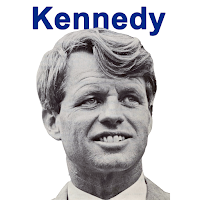
Robert F. Kennedy understood this. Campaigning in 1968, he said,
“Fellowship, community, shared patriotism – these essential values of our civilization do not come from just buying and consuming goods together.”
They come from
“dignified employment at decent pay, the kind of employment that lets a man say to his community, to his family, to his country, and most important, to himself, ‘I helped to build this country. I am a participant in its great public ventures.’” (RFK: Collected Speeches 385-86)
Politicians don't much talk that way anymore.

Meritocracy puts competition at the center of public life, instead of putting our shared civic enterprises at the center. Meritocracy also puts that competition at the center of our individual sense of who we are. Meritocracy defines us – to each other and to ourselves -- by what we deserve, what we earn. It teaches us relative disregard for all the range of life that isn’t marketable.

It may help to look more closely at the two factors that make up merit, or deservingness: talent, ability, natural gifts on the one hand and effort, hard work, training on the other.

First, let us ask: from where did the talent come? Some of it came from genes – that’s luck. Some of it came from childhood experiences. But growing up in the right sort of environment to bring out a given ability is not something the individual made happen. That’s also luck.

The other factor – effort, hard work, motivation, training -- isn’t always possible to separate from native talent. But whether you have the opportunities for training, have good coaches available, and training facilities, have encouraging people around you, and an environment that yields enough reward for hard work early on so that it develops as a habit – that’s all luck. There may also be a genetic component in predisposing some people to focused work and delayed gratification, and, if so, that would also be luck.

If you’re lucky enough to find yourself motivated, and lucky enough to find yourself talented, then you’ll be said to have merit. The supposed distinction between unearned luck and earned deservingness collapses under scrutiny – so merit is always a pretense.

There are certain spheres of life where the pretense is necessary. When it’s time to ask the boss for a raise, you go in and make the case for how you deserve it. But later, when you're back home, in a moment of calm reflection where you can step back from your work life and can view it in your spiritual, holistic capacity, then you can appreciate that, really, there is no deserving. It’s all grace. You just happened to have some skills – including the skill called “motivation” – and you just happened to live in a world with market demand for your particular skills – and just happened to have the boss and the company that you do. All luck. All grace.

Now: Can you hold on to that spiritual truth even as you return again to the sphere of markets and work? It’s like the capacity to play a game -- parcheesi or gin rummy or chess -- while at the same time knowing that you’re just playing a game. Or like the capacity to watch an engrossing movie, while a part of you retains the consciousness that what you’re looking at is just lights on a screen. In the case of games and movies, it's pretty easy. In the case of merit, it takes a special spiritual maturity to resist the tendency to convince ourselves that we somehow deserve our luck. As Max Weber observed back in 1915:
“the fortunate person is seldom satisfied with the fact of being fortunate. Beyond this, he needs to know that he has a right to his good fortune. He wants to be convinced that he ‘deserves’ it, and above all, that he deserves it in comparison with others. He wishes to be allowed the belief that the less fortunate also merely experience their due. Good fortune thus wants to be 'legitimate' fortune.” ("The Social Psychology of the World Religions" [1915])
To be able to hold before you unwaveringly the insight that your good fortune really is just good fortune -- really is utterly undeserved -- to never forget that for a moment -- even when you’re in the middle of an intense round of the game called, “demanding what you deserve,” – that is a difficult spiritual challenge. I regularly bring myself back to this awareness that it’s all grace, that none of it is deserved or earned, but that bit about “never forget for a moment” is beyond me. I do regularly bring myself back to remembering, but that’s because I do regularly forget.

This might be your first glimpse of seeing through the illusion of merit – the first time it came to your notice that the distinction between deserving and lucky is illusory. If so, I urge you to hold on to that. Don’t let it slip away. Rest in that new way of seeing, and imagine what it might be like to live that way – with awareness that merit is a fiction, a game you are sometimes called upon to play, but which you recognize isn’t real.

If you imagine holding that awareness in your mind, what difference would that make for your life? For one thing, if you’re sharply aware that it’s all luck, then you’ll be less caught by surprise when the luck changes. Market shifts can make your particular skills no longer in demand. A sudden accident or disease can make your body no longer able to play the violin, or hold a scalpel steady – or can make your mind less able to concentrate. In the vagaries of fortune, if you’ve thoroughly grasped that your success is not deserved, then you’ll be prepared to see your failure, when it comes, isn’t deserved either.

And something else. Not only do you not deserve your failure, but you’ll more clearly see that other people don’t deserve theirs. Under the meritocratic ethic, my success is my own doing, so other people’s failure must be their fault. Meritocracy thus corrodes commonality. It traps me within the delusion that we aren’t in the same boat. Meritocracy says that I built my boat, and you built your boat, so there’s no particular reason I need to be concerned if yours is sinking. But if I see my situation as wholly an undeserved grace, then I can imagine a new and harsher grace that might put me in someone else’s shoes. (Ram Dass, after the stroke that left him wheelchair-bound, called it 'fierce grace.') And if I can have that clarity, then my life turns in a different direction, turns toward a different task. My task is not to out-compete others for the prizes of success and status. Nor is it to facilitate my children in out-competing others. My interest shifts from the prizes available only to the winners to restoring the dignity of all work.

There is a possible world in which everyone, whatever their talents and training, can meaningfully contribute their work to our shared public enterprise, and meaningfully contribute their voice to democratic deliberation that forms that enterprise. It will be no easy thing to get there from here. It will take, at best, several generations to reverse the effects of the last several generations.

Meanwhile, here in the microcosm of a congregation, we practice. Week in and week out, we embody a communal life without meritocracy, where we stand together on ground of equality, where everyone can meaningfully contribute to our shared enterprise, where we learn together an ever-deepening appreciation of grace and our inherent solidarity. Week in and week out, we are demonstrating to the world a better way.

2024-02-04

The Spiritual Impact of Inequality

Words of Rev. Mark Morrison-Reed, from the back of our hymnal:
"The central task of the religious community is to unveil the bonds that bind each to all. There is a connectedness, a relationship discovered amid the particulars of our own lives and the lives of others. Once felt, it inspires us to act for justice. It is the church that assures us that we are not struggling for justice on our own, but as members of a larger community. The religious community is essential, for alone our vision is too narrow to see all that must be seen, and our strength too limited to do all that must be done. Together, our vision widens and our strength is renewed."
So let us unveil those bonds that do connect us – and together let our vision widen and our strength be renewed. We live in a time of great polarization – and the political polarization is itself an outcome of the income and wealth inequality.

On November 2, 1980, my daughter Morgen was born. She was born into a country that certainly had poverty, but did not see the sort of wealth disparities we have now. Two days after she was born there was the 1980 presidential election, and Ronald Reagan won it. Morgen turned 43 last November, and over the course of her life so far there’s been a massive transfer of wealth to the wealthy.

In 1979, the poorer half earned 20% of the nation’s pre-tax income. By 2014, just 13%. If the US had the same income distribution it had in 1979, each family in the bottom 80% of the income distribution would have $11,000 more per year in income.

From 1947 to 1979, we all grew. In those 32 years:
  • For the bottom 20%, income rose 116%.
  • For the second quintile, income rose 100%.
  • For the middle quintile, income rose 111%
  • For the fourth quintile, income rose 114%.
  • For the top 20%, income rose 99%.
So: all quintiles rose a comparable amount – but the bottom 20%, by a small margin, grew most of all. And the top top 20%, by a small margin, grew least of all. That was during the 32 years from 1947 to 1979. But from 1979 to 2007, it was a completely different story. In those 28 years:
  • For the bottom 20%, income rose 15%.
  • For the second quintile, income rose 22%.
  • For the middle quintile, income rose 23%.
  • For the fourth quintile, income rose 33%.
  • For the top 20%, income rose 95%.
In 1980, the richest one percent of people got eight percent of the income -- which means they were getting eight times the mean income. Eight times the mean income would seem to be plenty. Who could want more than that? Surely that’s more than enough. But in 2011, the richest one percent brought home 20 percent of all income -- 20 times the mean.
"During the 1950s and 60s, CEOs of major American companies took home about 25 to 30 times the wages of the typical worker. In 1980, the big-company CEO took home roughly 40 times. By 1990 it was 100 times. By 2007, CEO pay packages had ballooned to about 350 times what the typical worker earned.” (Robert Reich, Forward to Wilkinson and Pickett, The Spirit Level: Why Greater Equality Makes Societies Stronger.)
Modern life is tough. Living the way we do is hard on people: anxiety, depression, unsure friendship, consumerism, lack of community. Not all of that would go away if suddenly, magically tomorrow all income and wealth distribution were at 1979 proportions again. Now, I need to say that I’m always suspicious of any scenario invoked with “if suddenly, magically tomorrow” – because there are no magic wands, and HOW we get somewhere is always going to be a huge part of what it means to be there. So what would it take? It would take some massive programs to create more jobs, bills to ensure that they paid well, lots of aid and assistance, like what we saw during the pandemic, only more – and to pay for it all, a progressive income tax of the likes we had in this country in the 1950s.

The top marginal tax rate is now 37% It’s been in the 30s – or even briefly as low as 28% -- ever since the Reagan administration. But back during the top marginal tax rate was 92% -- then in came down to 91% and stayed there through 1963. In 1963, for a single filer, any income above $200,000 was taxed at a 91% rate. That was 60 years ago, and general cost of living then was about a tenth of what it is today, so $200,000 then was about equivalent to $2 million now. Imagine taxing all income above $2 million at 91%. What’s actually much harder to imagine is our congress approving such a change. It would take a huge and drastic popular movement that voted into office very different representatives than we have now. The building of that movement would involve substantial attitude shifts in a lot of people. It would take a moral awakening of mass numbers of people to really care about the well-being of everyone. And if THAT happened, we’d already be in a very different world, quite apart from the effects of the legislation we would then be able to pass. Just living in a world where most people really cared about the well-being of all people would itself go a long way to easing the anomies of modern life: anxiety, depression, unsure friendship, consumerism, lack of community.

The state of huge disparities of income – and the even huger disparities of wealth – make everything that’s tough about modern life is worse. What may be an even bigger factor is the practical political reality that we live in a country that allowed this to happen, that has been voting into office the leaders that made it happen ever since my daughter was born. We live in a country that is largely unmotivated to rectify it. I, for one, veer between anger and sadness at this reality.

There are a lot of different ways to measure inequality: the top X percent versus the bottom Y percent. But any X or Y we might choose reveals about the same trends, and about the same differences between nations. One common metric, which I will highlight because the UN uses it, is the ratio of the income at the 80th percentile to the income that’s at the 20th percentile. This 80th to 20th ratio is, in the US, as of 2022, at 8.6. It’s been running at about that for over a decade, though during the pandemic we had a temporary drop down to 7.1. Canada, Japan, and most of Europe are below 5. When this 80th percentile to 20th percentile ratio is less than 5, then we find a society generally maintaining some shared assumptions about wealth and about each other. Roughly, when that ratio is about 5 or less, the attitude of the populace will resemble something like this:
“If there are somewhat wealthier folks among us, that’s OK. I can accept that some people are luckier, or more skillful at work that society prizes, or they’re more driven to work hard, and they end up wealthier. That’s fine – and as it should be. The relatively wealthy serve as a reminder to me of what good schooling and hard work and a little luck might make available to my children. If the town doctor has a big house on a hill, that’s OK – ze’s smart and had a lot of training, and ze’s using that to help us when we get sick, so more power to zir. Maybe my kid can get a scholarship and be a doctor.”
That kind of thinking was still pretty much the largely-unspoken norm on the day 43 years ago when I first held my newborn daughter in my arms. But that attitude loses purchase, begins to slip away, if the rich-poor gap grows too large. That outlook that prevailed through my growing up and my parents lives up until 1980, has now come to seem quaint -- an echo of a bygone time. Few, it seems, think like that anymore.

Things changed during the time of my daughter’s growing up. The two key features of the old outlook were:
  1. the higher levels of wealth were attainable by those who weren't already rich; and
  2. those who had wealth deserved it.
These two features are connected, for when upper-class wealth seems attainable – when the perception of most people is that anyone with the right combination of talent, drive, and luck can become upper-class – then those who do make it to society’s top wealth echelons are presumed to deserve it. But when the gap becomes as enormous as it has in the US, the folks at the bottom and middle can no longer see the wealth of the ones at the top as either attainable or deserved.

By the time my little girl was graduating from college in 2002, the world she was commencing into had become profoundly different from the one she was born into. The country had become a place where we could no longer feel we were all in this together.

Now, I know that the idea that there once was, up until 1980, a halcyon time of general social solidarity overlooks the deep racism that has divided our country throughout its history. I know that, given the horrors of Jim Crow segregation, gauzy nostalgic impressions of togetherness are delusional. Even so, whites could see rich whites as attainable, and blacks could see wealthier blacks as attainable. But in this century, even that has fallen apart.

There is an argument that we should be concerned with poverty, but not with inequality. It’s our business as a society to make sure that everybody has enough, this argument goes, but not our business how much more than enough the rich have. Here’s the thing, though. What we want is to care and be cared for. We want, and need, to be in relations of mutual care. And when that need is not met, it makes anxiety, depression, and social alienation more likely. Societally, when inequality becomes great, we lose the sense of community, lose the sense that we’re all in this together.

Researchers into “social health” typically measure it as an amalgam of ten factors. The lower the rates of:
  • homicides
  • obesity
  • teenage births
  • infant mortality
  • imprisonment rates
  • mental illness (including drug and alcohol addiction),
and the higher the:
  • life expectancy
  • children’s educational performance
  • social mobility
  • level of trust
then the higher a nation's social health.

Using this definition of social health, researchers have then found that a country’s wealth does not correlate with its social health. A country may be rich, medium, poor, or extremely poor (less than $10,000 per person per year). Except in extremely poor nations, more wealth has no effect on social health. Equality, however, does correlate with social health. Countries with high inequality, whether rich or poor, have low social health. Countries with low inequality, whether rich or poor, have high social health. The US is quite wealthy, but on the measure of social health we’re doing worse than most countries that have only half that much per-person income. After meeting a certain minimum, more wealth doesn’t do us any good. Equality does. In statisticians' terms, the mean income, as long as it’s above $10,000, doesn’t matter. It’s the standard deviation that matters.

Social health means a better quality of life for all of us. Richard Wilkinson and Kate Pickett write in their book: The Spirit Level: Why Greater Equality Makes Societies Stronger
“The evidence shows that reducing inequality is the best way of improving the quality of the social environment, and so the real quality of life, for all of us . . . this includes the better off.”
A relatively equal society – where the ratio of the 80th percentile to the 20th percentile is less than 5 -- can sustain a shared understanding among its members. But if, as in the U.S., that ratio is close to 9, there’s a disconnect. We lose the shared understanding of the legitimacy of things. The wealthy are beyond attainability, and beyond any credible story of deservingness. We lose the sense that we’re in this together. The wealthy become “them.” And "they" don’t care about "us" -- so we don’t care about them. Anomie and division set in; anger and alienation become the social mood. Sensing the resentment of most of society, the wealthy, in turn, retreat behind gated communities, which further increases the disconnect.

We begin to believe the game is rigged; we don’t have a chance. When we believe that, we become more likely to behave in ways that make that a self-fulfilling prophecy. Rich and poor alike feel the division, the disconnect. The result is that phenomenon I mentioned: everything that’s tough about modern life is exacerbated. Higher levels of depression, higher levels of consuming things that aren’t good for us: from drugs to alcohol to junk food to mindless TV shows to mindless consumer products. As I wrote in my column in this month’s issue of Connecting: When you compare nation to nation, there’s no correlation between wealth and life expectancy or mortality. No correlation. Rich countries have about the same life expectancies and mortality rates as relatively poor countries, until you get into the really poor end of the spectrum. As long as a nation has per-person income above about $10,000 a year, further increases do nothing to increase life expectancy. That’s the nation-to-nation comparison.

But when we do a zip-code-to-zip-code comparison, we get a different picture. The poorer zip codes have higher mortality than the richer zip codes. If you took several of the poorest zip codes, created a new island in the Pacific, put them all there, maintained their per-person incomes as they were, made a new island nation of them, they’d have decreased mortality. They’d be fine. But because they live near the wealthier areas, they perceive that difference. They see all around them the inescapable fact that they live in a society that is set up to work for others, but not for them. They are reminded daily that they are not in a society of mutual care. And THAT wears them down much more than relative material deprivation.

Wilkinson and Pickett write:
“At the pinnacle of human material and technical achievement, we find ourselves anxiety-ridden, prone to depression, worried about how others see us, unsure of our friendships, driven to consume, and with little or no community life.”
Wilkinson and Pickett go on to note:
“The unease we feel about the loss of social values and the way we are drawn into the pursuit of material gain is often experienced as if it were a purely private ambivalence which cuts us off from others....As voters, we have lost sight of any collective belief that society could be different. Instead of a better society, the only thing almost everyone strives for is to better their own position – as individuals – within the existing society.”
A complex web of interrelated factors has brought us to this pass, and growing income inequality is a key node within that web. It fosters the sense of divide. If we’re going to get back to a sense of common good – where political differences are differences of strategy for promoting general welfare rather than the drawing of enemy lines to delineate who must be defeated – then it will be necessary to reduce income inequality.

Equality has benefits that show up all over. They show up, for example, on baseball teams. “A well-controlled study of over 1,600 players in 29 teams over a nine-year period found that major league baseball teams with smaller income differences among players do significantly better than the more unequal teams.” (Wilkinson and Picket, The Spirit Level: Why Greater Equality Makes Societies Stronger, 237). When people feel like they stand on equal footing with their neighbors or teammates, there’s a cohesion that lifts spirits, heals wounds, and improves performance.

Unitarian Universalists care about our world. And it’s clear now that
“further improvements in the quality of life no longer depend on further economic growth. The issue is now community and how we relate to each other.” (Wilkinson, Pickett)
The issue is building a world in which most of us care about the well-being of all of us. The issue is not only at the economic level but at the spirit level. The wound is to our spirits, yet, wounded as they are, the resolve to heal must also come from our spirits.

“The religious community is essential,” as Rev. Mark Morrison-Reed said, “for alone our vision is too narrow to see all that must be seen, and our strength too limited to do all that must be done. Together, our vision widens and our strength is renewed."

May it be so. Amen.